Tasmanian Hydro Schemes
Burnie is the gateway for the next generation of clean energy investment.
Tasmania’s electricity system is a unique, predominantly renewable network, with more than 90% of generation sourced from hydropower, solar and wind. Operated largely by Hydro Tasmania, the system includes 30 hydropower stations and 54 major dams, supported by gas-fired backup generation. The Basslink interconnector enables Tasmania to export renewable energy to mainland Australia during periods of high demand and import electricity when additional supply is required, such as during low rainfall periods.
Hydro Tasmania is embarking on a generational program of investment to renew some of Tasmania’s oldest critical energy infrastructure.
The proposed Tarraleah Redevelopment is a major example, replacing ageing canals, penstocks and the existing power station after more than 85 years of operation with modern infrastructure designed to serve Tasmania for decades to come. The project would more than double peak capacity from 90MW to 190MW and generate around 30% more energy from the same water, while providing greater flexibility to support wind and solar generation.
These investments are about more than simply upgrading ageing assets, they represent the renewal of infrastructure built by previous generations, ensuring Tasmania’s renewable energy system remains reliable, productive and capable of meeting the state’s future energy needs.
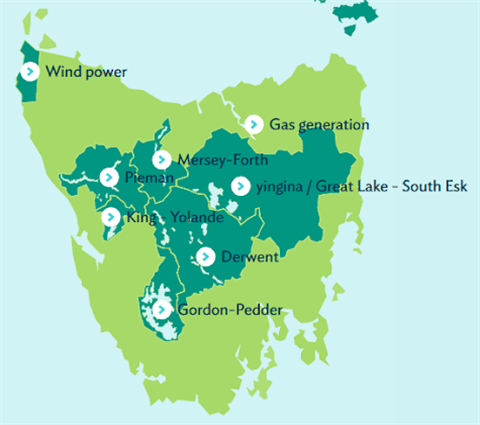
Tasmania’s Hydro System at a Glance
- Gordon–Pedder + Derwent = ~45–55% of all hydro generation.
- Great Lake = strategic high-altitude storage reserve.
- West Coast Pieman = most rainfall, reliable generation routed via local North-West transmission lines, ensuring grid stability for local operations.
- Mersey–Forth = industrial NW backbone, local generation cluster.
Supplies power to large industrial loads in the NW (e.g. manufacturing, processing).
Supports regional agriculture irrigation systems and Towns.
Provides stable, dispatchable hydro generation that helps balance the grid when demand spikes.
| Scheme |
Key Lakes / Dams |
contribution* |
| Gordon–Pedder (Southwest) |
Lake Gordon, Lake Pedder, Serpentine Dam, Scotts Peak Dam |
20–30% |
| Derwent (Central / Southern) |
Lake King William, Lake Echo, Lake Meadowbank, Lake Catagunya system |
20–25% |
| Pieman (West Coast) |
Lake Mackintosh, Lake Rosebery, Lake Pieman, Lake Murchison |
15–20% |
| King (West Coast) |
Lake Burbury - Crotty Dam , Darwin Dam
Lake Margaret to Yolande catchment
|
|
| Mersey–Forth (North-West) |
Lake Cethana, Lake Barrington, Lake Mackenzie, Lake Rowallan |
10–15% |
| Great Lake (Central Highlands) |
Great Lake (Yingina), Arthurs Lake (linked storage) |
10–15% |
| South Esk / Trevallyn (Northern) |
Lake Trevallyn and connected South Esk catchment storages |
5–10% |
| Smaller Run-of-River Systems (various locations) |
Multiple minor alpine and coastal catchments |
5–10% |
* Approx Contribution to Tasmania Electricity production
Australia’s Clean Energy Market
Australia’s energy market is rapidly changing as coal generation retires and renewable energy expands.
Tasmania is well placed to play a larger role in the national energy system. With extensive hydropower, emerging pumped hydro, and world-class wind resources, the state can generate more than enough clean energy for local needs.
This positions Tasmania to export surplus, reliable, and affordable renewable energy to support mainland Australia’s transition, with further interconnection to Victoria critical to unlocking these opportunities, while initiatives such as Battery of the Nation expand storage and generation to support a reliable, renewable grid.
Burnie is the gateway to Tasmania’s renewable energy future, playing a pivotal role in the state’s energy transition. Marinus Link and TasNetworks infrastructure will strengthen the region’s connection to the mainland, supporting jobs, investment and long-term energy security. Combined with its deepwater port, heavy rail network and high-voltage transmission infrastructure, Burnie is well positioned to attract major industrial and renewable energy investment across North-West Tasmania.
Building a robust clean energy ecosystem drives local economic development by attracting green manufacturing, securing long-term grid stability for industry, and creating high-skilled regional jobs.