Marinus Link Project Updates
www.marinuslink.com.au
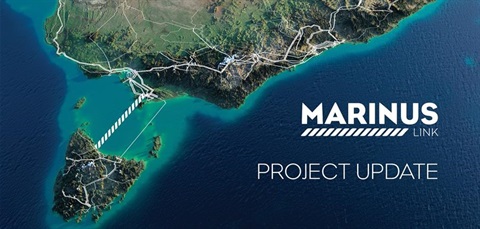
Marinus Link is a major project connecting Tasmania and Victoria by electricity and telecommunications.
For Burnie and the North West Coast, it means more local jobs, lower power prices, and a boost to clean energy. It will support enough power for 1.5 million homes and unlock $7 billion in new wind, solar, and hydro projects.
A key part of the project is the converter station at Heybridge, where work is already underway, including sea floor testing using a special platform out on the water.
Marinus Link involves some:
- 255 kilometres of high voltage direct current (HVDC) undersea cabling
- converter stations at each end in Tasmania and Victoria
- 90 kilometres of HVDC underground cabling - 150 times greater than all three current Bass Strait fibre optic cables combined!
- The first 750 MW stage is forecast to be built and operating from 2028, with the second 750 MW stage from 2030.
- Marinus Link Pty Ltd is a subsidiary of TasNetworks.
Work with Marinus
Opportunities for Local Jobseekers , Contractors and Suppliers
Marinus Link offers a wide range of job, supplier, and contractor opportunities as the project moves toward construction. Career roles include administration, engineering, project management, HR, communications, and more. Local suppliers including caterers, accommodation providers, equipment hire, and civil contractors are encouraged to register their interest. During construction, there will also be demand for trades and technical roles such as electricians, labourers, welders, carpenters, and machinery operators.
- To work with Marinus Link: email mlplpeopleteam@marinuslink.com.au
- To supply to Marinus Link: email procurement@marinuslink.com.au
- To contract with Marinus Link: visit ICN Gateway for details.
Use REGISTER WITH MARINUS LINK in your subject line.
Community Engagement
marinuslink.com.au/category/community-updates
2025: Development applications and environmental approvals were open for public feedback, with drop-in sessions and webinars in Burnie and Heybridge. Over 170 local businesses attended briefings to connect with shortlisted construction teams, creating opportunities for local subcontracting.
2024: Engagement focused on how Marinus Link supports Tasmania’s clean energy future, with information on economic benefits, lower power prices, and local geotechnical investigations shared for transparency.
2023: Marinus Link built stronger local connections through a Community Partnership Program with Burnie City Council and kept a presence at events like the Burnie Show and Agri-Expo to encourage community input.
Project Updates
marinuslink.com.au/category/media-releases
2026
Mobilisation to commence construction is expected in the new year.
January: AER approved Marinus Link and North West Transmission cost recovery, enabling full construction to proceed in 2026 with costs recovered via transmission charges from 2030.
2025
Marinus Link made significant progress in 2025 as it moved closer to construction on this nationally important clean energy project.
December: The final Stage 1 major works contract was awarded to TasVic Greenlink (a joint venture between DT Infrastructure and Samsung C&T Corporation). The $994 million contract covers construction of converter stations at Heybridge and Hazelwood, equipment installation, and 90 km of land cable civil works across Gippsland. The Australian Energy Market Operator’s Draft 2026 Integrated System Plan also reaffirmed Marinus Link’s critical role in delivering least-cost, reliable energy as coal retires.
November: Tasmania’s EPA issued Environmental Assessment Reports for the Heybridge Shore Crossing and Converter Station. Final modelling confirmed Marinus Link could save the National Electricity Market around $3 billion in future energy costs.
Aug-Oct: Final plans were submitted to the Australian Energy Regulator, marking a key step toward construction. TasVic Greenlink was announced as the preferred contractor. The project received final Australian Government environmental approval, with Tasmania’s contribution capped at $103 million and major benefits forecast for jobs, investment and lower energy costs.
In early 2025, community feedback was sought, businesses invited to register interest, and Stephanie McGregor was appointed CEO to lead delivery. Prysmian was awarded a $647 million contract to manufacture and install 345 km of cable, including under Bass Strait, one of the project’s biggest milestones. The AER confirmed costs as fair and efficient, Victoria approved environmental impacts, and the Marinus Link Board approved progression. Two major construction consortia, TasVic Greenlink and Empower, were shortlisted, boosting local business opportunities.
2024
The Marinus Link project officially came under the joint ownership of the Australian, Tasmanian, and Victorian governments. Public consultation opened on environmental approvals, confirming the use of advanced technology to power the link. National energy strategies identified Marinus as vital for Australia’s clean energy future. After consultation closed, the project set a completion date of 2030 and began finalizing land access agreements. Leadership changes were made, and independent regulators commenced cost reviews by year’s end.
2023
Marinus Link advanced with increased community engagement. A new CEO was appointed, local groups were consulted, and ongoing discussions with businesses and governments took place. Leadership transitions prepared the project for its next phase. Plans were publicly shared, First Nations consultations progressed, and cable capacity was secured. Innovative survey technologies were introduced, and educational initiatives inspired students about clean energy careers. By year’s end, tenders opened for contractors, and sports partnerships promoted energy sector jobs for young Tasmanians.
2022
Experts highlighted Marinus Link’s urgent need to support Australia’s power supply. New board members joined, and governments signed a key agreement to deliver the project. Studies confirmed its role in ensuring reliable, affordable electricity. By year’s end, the project was tender-ready, discussed creating a Renewable Energy Zone, and announced funding to boost local employment.