Burnie CBD Street and Public Realm Style Guide
Published on 24 March 2026
Burnie’s story began long before the first survey lines were drawn or the first ship anchored in its deep harbour. For thousands of years, the Plairhekehillerplue people of the North Nation lived along this coastline, moving with the rhythms of the sea and the seasons. This part of pataway/Burnie’s heritage and stories of the First Nations community is largely untold but is enduring and woven into the fabric of this Country.
When Europeans arrived at the turn of the 19th century, they found pataway/Burnie to be a place both wild and promising. In 1827, the Van Diemen’s Land Company established a small settlement at mutawaynatji/Emu Bay, a remote outpost carved from dense forest and the rugged shoreline. It was a place built by hands — axes, saws, timber and grit. Ships came and went, carrying away the region’s great stands of timber and bringing in goods that sustained a growing community. Burnie’s identity as a ‘City of Makers’ began here, in the interplay between natural abundance and human ingenuity.
As the decades unfolded, Burnie grew into a thriving Port and industrial city. The harbour deepened, the railways pushed inland, and the city became a vital link between Tasmania’s resources and the world beyond. The arrival of the pulp and paper mill in the 1930s marked a new era. Its towers, steam, and shift whistles became part of the city’s soundtrack, and generations of families found their livelihoods within its walls. Burnie’s unsung heroes were the mill workers, the port crews, the railway teams, the craftspeople who kept the city moving.
Today, Burnie finds itself on the cusp of a new chapter. The heavy industries that once defined it have quietened, leaving behind both a strong legacy and opportunity for reinvention. The city’s industrial backbone is becoming a platform for creativity, innovation, and sustainable enterprise. Burnie’s future lies in embracing its layered identity: coastal and industrial, rugged and inventive, grounded yet forward looking.
The aspiration is not to reinvent Burnie’s City Centre into something unrecognisable, but to let it evolve into its next, true form. A City Centre that honours its heritage while opening itself to new possibilities. A place that supports commercial activity, as well as artisans and manufacturers who carry forward the city’s tradition of craft. A place that understands its strength lies in its people - their adaptability, their craftsmanship, their deep connection to this stretch of coast.
The key is to shape the future of Burnie’s City Centre with the same determination, creativity, and quiet pride that shaped its past.
Theme - Recognisable identity
The Makers Grain
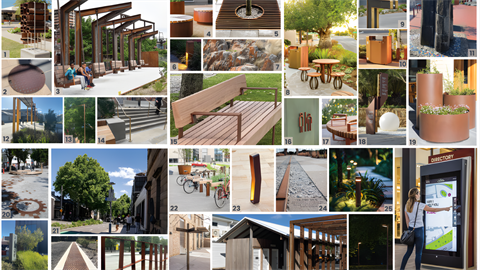
The ‘Makers Grain’ expresses Burnie’s identity as a city built by hands and moved by ideas. It blends industrial grit with the creative spark of its community – celebrating fabrication, craftsmanship and innovation. This theme draws inspiration from the textures and layers that shape Burnie – its rugged coastline, timber grain, paper fibres, basalt foundation, red soils, and the marks left by nature and the community.
Style Guide - Colours, materials, and design style
Design Cues
- Linear form, with overlapping and varied surface planes.
- Modular configurations preferred.
- Contemporary art-deco style and colour palette.
- Textural qualities to design with patterns, motifs and woven elements intertwined.
- Interpretive and decorative elements, as a nod to Burnie’s layers and makers heritage (past
- and present)
- Landscaping that emphasises texture and rhythm, utilising palette of native and ornamental
- plants providing pops of colour
- Feature lighting and digital elements to create a vibrant and striking CBD at night.
Design Inspiration - Look, feel, and function
The survey is now closed. Thank you for those who provided your feedback.